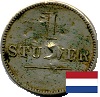
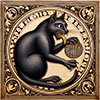
why the 1, 2 and 5 euro cents from finland are catalogued on numista divided by 1st type and 2nd type even if they have the same KM number? Which is the difference between 1st and 2nd type? Why in the case of the other countries there is no difference between the types before and after 2007?
I see what you mean now. I was wondering then if it was to do with the Euro Zone expanding.
Maybe not though; but the link below explains, hopefully ...
I show the two pictures below (reverse of Finland 2 Euro Cent) - the original ones (size not changed) off the Numista pages. The first coin (2000) is before 2007 change. The second coin (2008) is afterwards. From reading the above link, I see the addition of FI (for Finland) on the lower right of the sword blade.
I was wondering the same question. Is that little difference enough so the coins would be separated in two types? There are coins with bigger differences still considered as one type.
KM is not a bible or any other holy book. If referee knows that Krause is wrong, or could be better, there is no point sticking to Krause.
Arguments like: "Everyone has Krause, let's be the same!" "Everyone collects by KM, and this is obstructing!" are senseless. Catalogue should be as perfect as it can, without making it simple because somebody else failed to spot a mistake or difference before.
That was just a general talk. If difference is only mintmark, it usually stays on one page.
In 2006 or so, the European Central Bank decreed that all euro coins shall carry an indication of the issuing country on the national side. Appropriate were considered the full country name in a national language, a commonly used abbreviation (e.g. RF and RI for France and Italy, respectively) or just the national flag (Austria).
For this reason, Finland added FI to the coins from 2007 onwards and Belgium added BE from 2008 onwards.
Germany and Greece withstood the decree and their common euro coins still do not carry an indication of the country name (their commemoratives do carry a capital D for Deutschland, or the full country name)
Against this background, I think it is justified to consider Finnish euro coins with or without FI as different types.
For me is one single type. FI (for Finland, not mintmark) and mintmark instead M (Raimo Makkonen, Mint Master, Mint of Finland) is not enough to change type. Only my opinion.
Coin referee for: Andorra, Equatorial Guinea, Marshall Islands, Moldova, Liberia and Spain
Banknote referee for: Andorra, Equatorial Guinea and Spain