I've always wondered why many coins (Euros mostly) have their material written as the proper alloy name "Nordic gold", rather than the broad definition of Brass. Nordic gold is a Brass type alloy, so I don't understand why the emphasis on being so specific.
In that case all Cu-Ni-Zn coins (which are most of Copper-Nickel coins) should be called "German silver - I, II or III" which is the alloy names given to CuNiZn alloys.
I don't find it confusing at all, in fact I label my Nordic gold coins as Brass (don't want my grandchildren building fake expectations on my bunch of Polish 2Zt and Euro cents); but a guy one day tried selling me a 20 euroCent coin for it's "gold melted value", because the book says it is "Oro Nórdico", so it has to be made of gold; and Nordic, so maybe even Viking gold.
He was convinced, and even when I rejected his offer and explained to him it was actually brass and that those coins exist by the millions he went to the "We buy Gold & Silver" store next to my house (one of my coin sources ) and asked the woman to test the coin, she had heard my explanation and said to him it was useless to test it, but he insisted... he got angry after she told him what I already told him after the test. I really hope he didn't bought that coin for more than its face value.
By the way, it was a Spanish 20 euroCent coin, a pretty common and circulated one... if it had been from one of the mini-countries maybe I had offer him something more than the 3 Pesos I was giving him (face value translated to Mexican Pesos).
Numista referee for the "Viceroyalty of the New Spain" (most of it).
History through coins.
Eli V
I think your story says it The word gold adds value to the coin. Not really. But, The general public are not very smart. They think of that word (gold)and in the back of there head it is GOLD.
Quote: ALLRED1950I think your story says it The word gold adds value to the coin. Not really. But, The general public are not very smart. They think of that word (gold)and in the back of there head it is GOLD.
Exactly why I think here in Numista they should be changed to Brass (something will surely never happen due to the European roots of the site). I am sure the strongest argument to keep it "Nordic gold" is because European mints say so when describing the materials; but guess what, here in Mexico the CuNiZn containing coins are called "Alpaca" alloy, which is another way of calling German Silver Type II.
Numista referee for the "Viceroyalty of the New Spain" (most of it).
History through coins.
Eli V
Quote: erdvillaI am sure the strongest argument to keep it "Nordic gold" is because European mints say so when describing the materials;
I use for my Euro coins the catalog "€uro 5":
A very good catalog about euro coins, with a lot of info and all the varieties, written in French.
In these catalog they call the material for 10, 20 and 50 euro cents: Cupro-aluminium "nordique" (so they also use the word "Nordic" but without the word "gold").
And I'm totally agree that the word "gold" put less experienced collectors on the wrong track and it's better to avoid that and change "Nordic gold" to "brass".
You wouldn't believe how many people are convinced that the current US Presidential $1 coins are gold.
For that matter there are an amazing number of supposedly professional coin dealers on eBay selling Cupro-Nickel coins as silver. There is a notorious crook from Israel with page after page of pocket change which he shamelessly sells to the gullible as sterling silver coins. When challenged the usual response from these bottom feeders is to claim they meant "silver coloured".
Crooks are attracted to foolish people like sharks in a feeding frenzy.
Non illegitimis carborundum est. Excellent advice for all coins.
Make Numismatics Great Again!
The change "Nordic Gold" to "Brass (Nordic Gold)" would need a really hard-to-agree consensus, because I am sure as soon as a referee from a country starts making the change there will be an uproar from many users and Admins even, that will ask for a return to Nordic gold because "that is what the mints call it". But I think it is really necessary.
Numista referee for the "Viceroyalty of the New Spain" (most of it).
History through coins.
Eli V
In France, in the 1st papers introducing euro coins before their release, I remember I saw "alliage nordique", aka. "nordic alloy". According to what I saw, it's a protected name of this alloy, that's why we can't modify it in English.
Administrateur du catalogue, référent de nombreuses nations antiques et de la Lorraine.
Catalogue administrator, numerous Antique nations and Lorraine referee.
Quote: chomp-masterIn France, in the 1st papers introducing euro coins before their release, I remember I saw "alliage nordique", aka. "nordic alloy". According to what I saw, it's a protected name of this alloy, that's why we can't modify it in English.
Yes it is a patented alloy. But that doesn't force catalogers and Numista to use the name. There are a lot other Brass alloys, from Naval, Musical, and many many more, so if we are forced to use the proper alloy name we would end up with coins made of "Musical brass" and "Naval brass" materials. The mints might need to call it Nordic gold to be able to use the alloy if the patent owner requested so, but aside from them nobody else is in the need of using their patented name; it is like promoting their product.
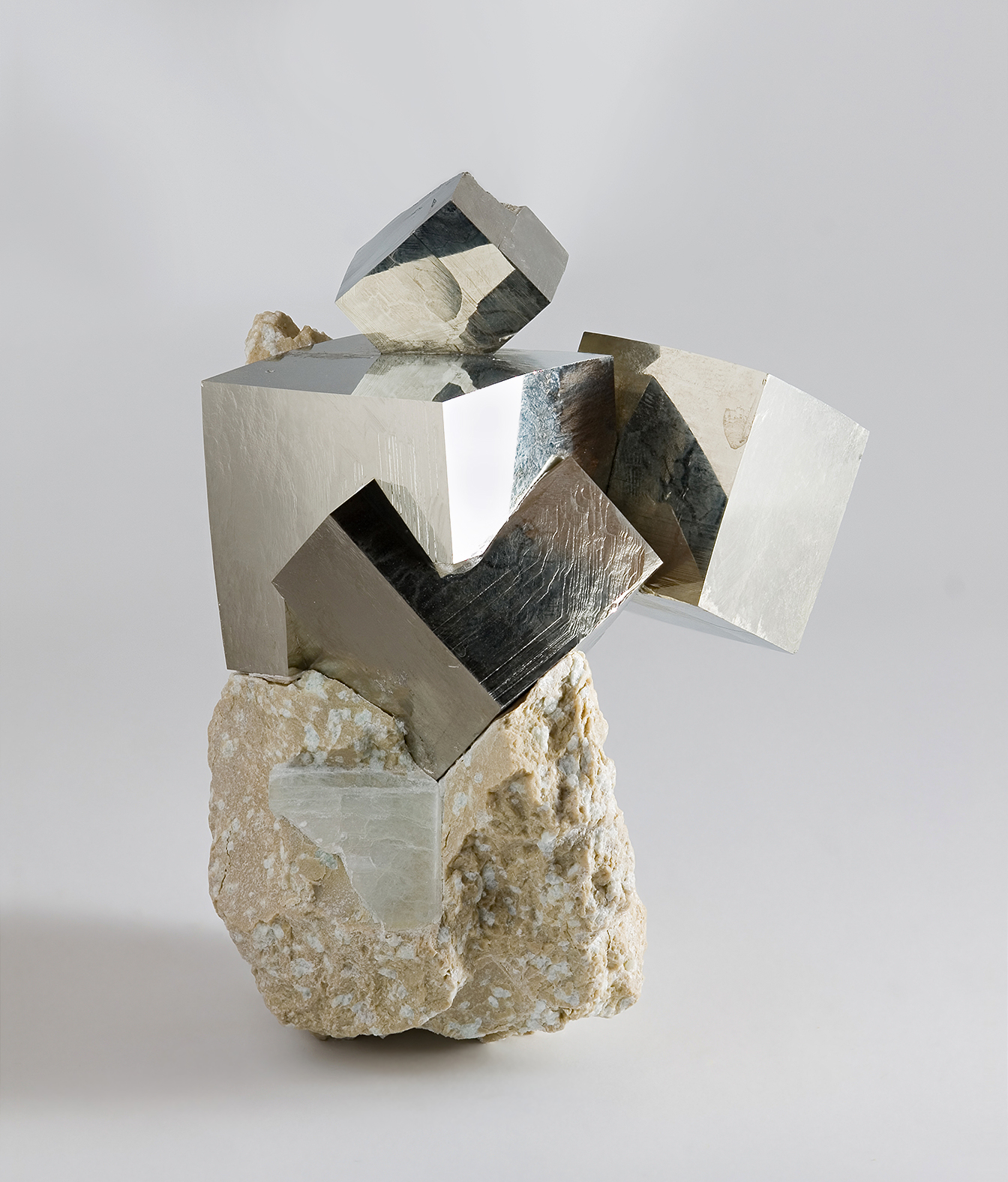
"Fools nordic gold" the new Pyrite (although this one might be the fools gold if worked correctly it is QUITE beautiful).
Numista referee for the "Viceroyalty of the New Spain" (most of it).
History through coins.
Eli V
Quote: erdvillaThe change "Nordic Gold" to "Brass (Nordic Gold)" would need a really hard-to-agree consensus, because I am sure as soon as a referee from a country starts making the change there will be an uproar from many users and Admins even, that will ask for a return to Nordic gold because "that is what the mints call it". But I think it is really necessary.
And if it's not going to change then we can only hope that a lot more members learned something more about "Nordic Gold", especially that is has nothing to do with "gold" whatsoever. Assuming of course that a lot of members read the forum, because with more than 46.000 members, I mostly see the same names returning over and over again.
Quote: erdvillaThe change "Nordic Gold" to "Brass (Nordic Gold)" would need a really hard-to-agree consensus, because I am sure as soon as a referee from a country starts making the change there will be an uproar from many users and Admins even, that will ask for a return to Nordic gold because "that is what the mints call it". But I think it is really necessary.
And if it's not going to change then we can only hope that a lot more members learned something more about "Nordic Gold", especially that is has nothing to do with "gold" whatsoever. Assuming of course that a lot of members read the forum, because with more than 46.000 members, I mostly see the same names returning over and over again.
Many users are only interested in managing their collections, so it is understandable if they don't have the time to comment. But it is always a good sign when users are active in the forum as it shows they are indeed collectors and communicative. When a swapper with 0 Forum posts has valuable coins in his swap list and has 0-20 feedbacks, all from users who all have rated among themselves...
Numista referee for the "Viceroyalty of the New Spain" (most of it).
History through coins.
Eli V
While we're at it .. I don't like the terminology Obverse and Reverse.. I like Front and Back and it should be changed throughout the whole catalog ..
Nordic Gold and German Silver are the names given by the industry to specific alloys, it is what it is .. !!! Numismatics is not a place for changing industry standards just because some people are too stupid or overly gullible to do research ..
? Format Format Format ? ?
Do not argue with ignorant people .. !! They will drag you down to their level, then pulverize you with experience ...
Quote: derfWhile we're at it .. I don't like the terminology Obverse and Reverse.. I like Front and Back and it should be changed throughout the whole catalog ..
Nordic Gold and German Silver are the names given by the industry to specific alloys, it is what it is .. !!! Numismatics is not a place for changing industry standards just because some people are too stupid or overly gullible to do research ..
You said it; "given by the industry".
Nordic gold is a patented name, but it is Brass. So it is like if all Medical catalogs called Aspirin the Acetylsalisylic Acid; they don't, the industry might have Bayer patented Aspirin name but with so many alternative makers it would be dumb to just call it that as it might cause people to only seek Aspirin as the only option; when the alloy (formula) a pretty easy to make universal brass (Acetylsalicylic Acid) is produced by tons of foundries (labs).
Numista referee for the "Viceroyalty of the New Spain" (most of it).
History through coins.
Eli V
Quote: erdvillaYou said it; "given by the industry".
Nordic gold is a patented name, but it is Brass. (...)
The problem with brass is that it's a label covering an extremely wide range of compositions of various metals, which should include copper and zinc. It goes as far that is was necessary to legally impose "lead-free brass" for many applications.
Nordic gold is a 0.89 copper, 0.05 zinc, 0.05 aluminum and 0.01 tin alloy. Replacing some zinc by aluminum makes the object/coin more corrosion resistant.
Quote: erdvillaYou said it; "given by the industry".
Nordic gold is a patented name, but it is Brass. (...)
The problem with brass is that it's a label covering an extremely wide range of compositions of various metals, which should include copper and zinc. It goes as far that is was necessary to legally impose "lead-free brass" for many applications.
Nordic gold is a 0.89 copper, 0.05 zinc, 0.05 aluminum and 0.01 tin alloy. Replacing some zinc by aluminum makes the object/coin more corrosion resistant.
Yes; that is why Numista should call it "Brass (Nordic gold)" that should make it complete as it describes both the alloy type and the specific recepie.
Numista referee for the "Viceroyalty of the New Spain" (most of it).
History through coins.
Eli V
Quote: "erdvilla"You said it; "given by the industry".
Nordic gold is a patented name, but it is Brass. (...)
The problem with brass is that it's a label covering an extremely wide range of compositions of various metals, which should include copper and zinc. It goes as far that is was necessary to legally impose "lead-free brass" for many applications.
Nordic gold is a 0.89 copper, 0.05 zinc, 0.05 aluminum and 0.01 tin alloy. Replacing some zinc by aluminum makes the object/coin more corrosion resistant.
Quote: "erdvilla"In that case all Cu-Ni-Zn coins (which are most of Copper-Nickel coins) should be called "German silver - I, II or III" which is the alloy names given to CuNiZn alloys.
German silver: 60% copper, 20% nickel, and 20% zinc Copper-Nickel: Between 90% copper, and 10% nickel — 70% copper, and 30% nickel
Quote: "erdvilla"I've always wondered why many coins (Euros mostly) have their material written as the proper alloy name "Nordic gold", rather than the broad definition of Brass.
Nordic Gold: 89% copper, 5% aluminium, 5% zinc, and 1% tin Brass: 65 % copper, och 35 % zinc
Quote: "kolikko99"to me nordic gold sounds a bit weird because nordic gold is uushopea in finnish and it means new silver
I guess you are talking about the German Silver here, and not the Nordic gold.
Any coin, which is not made of 'gold', should not be described as gold. I have just inserted 'gold' into the Numista search facility and it comes up with 782 ages of coins, so around 1,564 coins listed.
I would expect quite a high percentage of those are not truly gold, so, description needs to be re-classified.
Countries were re-classified into issuers, coins into tokens and exonumia and vice versa, so the metal content needs to be seriously reconsidered.
This also applies to German silver and any other incorrect use of precious metal names being wrongly attributed to coins
It feels like my comment where I represented the differences between brass vs. nordic gold etc., has been drastically overseen and ignored. But hey, why don't we just call it "metal" and "precious metal" to make it easy for everyone?
Quote: "ngdawa"It feels like my comment where I represented the differences between brass vs. nordic gold etc., has been drastically overseen and ignored. But hey, why don't we just call it "metal" and "precious metal" to make it easy for everyone?
No I don't think so. I for one get your point that it has a different composition than say brass and so calling it brass is a misnomer as well...however if we want to extrapolate the name, Nordic Copper seems more proper as the alloy is over 80% copper and 0% gold right? Yes I'm aware that this is simply the name given to the alloy and doesn't mean there is gold but you do have to admit it seems nonsensical. I am aware of the difference and I wouldn't make the mistake of thinking it is gold but others may including the unscrupulous.
I thought the idea of including the mixture by scrolling over the name might be a nice way to present it without ruffling too many feathers. You keep the name but you alert people to the actual non precious make-up.
Quote: "ngdawa"It feels like my comment where I represented the differences between brass vs. nordic gold etc., has been drastically overseen and ignored. But hey, why don't we just call it "metal" and "precious metal" to make it easy for everyone?
No I don't think so. I for one get your point that it has a different composition than say brass and so calling it brass is a misnomer as well...however if we want to extrapolate the name, Nordic Copper seems more proper as the alloy is over 80% copper and 0% gold right? Yes I'm aware that this is simply the name given to the alloy and doesn't mean there is gold but you do have to admit it seems nonsensical. I am aware of the difference and I wouldn't make the mistake of thinking it is gold but others may including the unscrupulous.
I thought the idea of including the mixture by scrolling over the name might be a nice way to present it without ruffling too many feathers. You keep the name but you alert people to the actual non precious make-up.
cheers mate!
the reason for the name is simply because of the colour (like this one and this one), just as german silver got its name simply because of the colour..i, too, like the idea of seeing the composition by hoovering/clicking the metal(s)..
I don't understand why the name "Nordic gold" is a problem.
If you seriously think that they use gold to make a 10 eurocent coin,
you better think twice.....
Quote: "PhilipBe"I don't understand why the name "Nordic gold" is a problem.
If you seriously think that they use gold to make a 10 eurocent coin,
you better think twice.....
This post reminds me of the Italian Km #111, made of "Acmonital" and "Bronzital" (https://en.numista.com/catalogue/pieces302.html) Both are brand names of two different alloys. Acmonital is some kind of stainless steel and Bronzital 92 Cu 6 Al 2 Ni (Bronce = 88 Cu 12 An).
Quote: "PhilipBe"I don't understand why the name "Nordic gold" is a problem.
If you seriously think that they use gold to make a 10 eurocent coin,
you better think twice.....
HAH! Word!
I agree, In NZ, we refer to our brass coins as gold (entry fees to festivals and events are usually a "gold coin donation"). Nobody thinks they're actually gold any more than our "silver" coins are silver. People like that will always find ways take advantage of the gullible. I like Cycnos's option the most, of having a hover-over that shows the precise ingredients.
Quote: "PhilipBe"I don't understand why the name "Nordic gold" is a problem.
If you seriously think that they use gold to make a 10 eurocent coin,
you better think twice.....
HAH! Word!
I agree, In NZ, we refer to our brass coins as gold (entry fees to festivals and events are usually a "gold coin donation"). Nobody thinks they're actually gold [...]
we do the same in sweden as well with our 10 kronor coin which we call it "a golden 10"..the last time it was a real gold 10 was the 1901 issue..
Quote: "PhilipBe"I don't understand why the name "Nordic gold" is a problem.
If you seriously think that they use gold to make a 10 eurocent coin,
you better think twice.....
HAH! Word!
I agree, In NZ, we refer to our brass coins as gold (entry fees to festivals and events are usually a "gold coin donation"). Nobody thinks they're actually gold [...]
we do the same in sweden as well with our 10 kronor coin which we call it "a golden 10"..the last time it was a real gold 10 was the 1901 issue..
Hi
At the request of the National Bank, 10 crowns of Sweden were patented-and made with this mix alloy.
it is a patent and the name is given -it can only cause confusion in children and the second group.
the question was to Nordic silver. I have 10 DDR medals, The composition of the metal is improperly cited by nickel silver. I put the medal on "numista" under the manufacturer's DDR-metal composition,, Nordic silver,,
it was also necessary for the medal to be marked for patent reasons.
Ha ha. It is a long thread. I think, let us not be very angry by all these wording and stuffs. A name is just a name. People these days just want fast answers because they Don like to wait and have been spoiled by the Internet. I think as long as you understand what is nordic gold, what is German silver, it should be OK. Technically there will always be some people that will come to you and say, hey, this German silver is silver and goes this and that. And by looking at this kind of person who describe things like this, we will know if he is knowledgeable or not. I still get people who says this is gold you know? I say yea plated. And they goes its still gold. I say this coin bla bla bla only uses 0.01gram of gold to be plated, bla bla bla. If he still insist, I say bring your theory elsewhere. Send it to pcgs for grading and tell me what they say. They stop there and leave.
I would say this, technically if you study material engineering, you will find that there are so many types of metal, and the same metal can be called by it generic metal followed by a code number (example aluminium 7005), it would have ruined your collection if you seek such perfection. So enjoy collecting it.
Be kind to people. Sharing is Caring. Collect what you like and not by the Crowd.
To seek for perfection, it is too painful and there is a very high price to pay. To seek for something comfortable is more easy. To seek for nothing is even more easy.
I think nordic gold has been introduced as a novelty in the world market, the problem is that it does not have an exact price, this kind of composition results in acid tests, and thus sold by traders, but what is the real purpose of this novelty? in my opinion it is the collection of real gold by rich people, so the only thing we can do is put a price on this gold, so that they are forced to buy again what they sell us for real gold .
I just want to understant the purpous of thread. We, as a comminunity, will not educate new collectors about alloys nicknames, but we treat them as complete idiots and just eradicate the terms used in most numismatic materials and call it something no “veterans” will undersgand.
I for one, who grew up with coins made of Nordic gold, would be very confused if I saw tje alloy described as “Nickel brass”. My first thought would be that it was a variety.
I just want to understant the purpous of thread. We, as a comminunity, will not educate new collectors about alloys nicknames, but we treat them as complete idiots and just eradicate the terms used in most numismatic materials and call it something no “veterans” will undersgand.
I for one, who grew up with coins made of Nordic gold, would be very confused if I saw tje alloy described as “Nickel brass”. My first thought would be that it was a variety.
Nobody is suggesting to eradicate the terms used in most numismatic materials. The suggestion is to retain those terms as “additional details” and change the primary composition to something that is technically correct. Currently there are zero coins in Numista with a composition of German silver. Adding that in the additional details is actually the opposite of what you are suggesting is happening. For something like Nordic gold (which is a primary composition in Numista) Nordic gold could remain as the primary composition with the additional details being “Brass Cu-Zn” to avoid any misconception that the coin actually contains gold.
Nobody is suggesting to eradicate the terms used in most numismatic materials. The suggestion is to retain those terms as “additional details” and change the primary composition to something that is technically correct. Currently there are zero coins in Numista with a composition of German silver. Adding that in the additional details is actually the opposite of what you are suggesting is happening. For something like Nordic gold (which is a primary composition in Numista) Nordic gold could remain as the primary composition with the additional details being “Brass Cu-Zn” to avoid any misconception that the coin actually contains gold.
Because in numista it's called nickel silver! (Composition!!) Today 583 of those are still in numista. Nordic gold 523 coins. Let the primary alloy be nickel brass with the supplement of German silver or Nordic gold, as shown above it works, and it's clear (I thought so, at least!)
What are you trying to do - do you want to change the world system?
What don't you like?
Everything is given by "patent"
Almost every coin and token manufacturer lists its material composition-and if he has purchased a patent for the production of an alloy labeled as such, he also labels it as such.
We are the last in line and therefore we have to respect the manufacturer - after him comes the seller and only then us.
,, Respect the law,,
German Silver or Alpaca:
Alpaca has many other names: pakfong, white brass, nickel brass, new silver. In English, the designations Nickel silver, German Silver, Paktong, New Silver, Alpacca (or Alpaca) are used. In German, in addition to the term Neusilber, we also encounter the terms Alpacca, Argentan, Minargent or Pakfong.
sellers claim "Nordic gold" - So what's not to like about it? - What bothers you about it?
You have already looked at my tokens here and without my knowledge someone changed the name of the metal,, I put it on the website with the correct designation of the metal as "German silver", someone changed it:
So leave it to this coin made like this 2000+ years ago -and now wise men change it to "copper and other mixed metals thrown into the furnace"
What? Put your hand over your mouth and then spank your own ass!
This is "Chinese" thinking and production-don't respect what someone invented in the past "just copy it" and give it a different name and let's move on.
Because in numista it's called nickel silver! (Composition!!) Today 583 of those are still in numista. Nordic gold 523 coins. Let the primary alloy be nickel brass with the supplement of German silver or Nordic gold, as shown above it works, and it's clear (I thought so, at least!)
You (we) need to be careful. Nordic gold is not the same as Nickel silver. There is no nickel in it. Aluminum brass would be better.
I do agree with you. The name of the composition given by the mint/issuing authority should always be retained. However, I also think that adding clarification that the composition doesn't actually contain gold/silver is beneficial.
What did those two German silver medals have as the composition before they were changed to Nickel brass? German silver is not an option for composition.
I do agree with you. The name of the composition given by the mint/issuing authority should always be retained. However, I also think that adding clarification that the composition doesn't actually contain gold/silver is beneficial.
What did those two German silver medals have as the composition before they were changed to Nickel brass? German silver is not an option for composition.
Hi have a nice day.
I added 10 medals to exonumia at once, I got them from my friend's mother-she bought them in the former GDR when she had a trip there.
It was some kind of tradition in the cities to issue this,, medal about the city,,
I had them for exchange the whole time I was here, but there was never any interest in the GDR . For all these medals, it is stated by the manufacturer that the coin is made of metal,, German silver,,
So, when inserting these medals, I also stated the composition "German silver", I also put them all as "Tourist Medals of GDR Cities"
Even dividing them into multiple sections is laughable:
I don't know why it changed and the metal was adjusted and the collection was divided into areas, it's just weird to me, I always wanted to get rid of them, but I know that it is a historical series with a story.
Try to find them on the GDR medal website and look at the composition of the metal.
So, when inserting these medals, I also stated the composition "German silver", I also put them all as "Tourist Medals of GDR Cities"
I can't comment on any of the changes as I wasn't involved. My question is how you stated the composition was “German silver” as that is not an option from the drop down composition list. Nickel silver does come closest.
So, when inserting these medals, I also stated the composition "German silver", I also put them all as "Tourist Medals of GDR Cities"
I can't comment on any of the changes as I wasn't involved. My question is how you stated the composition was “German silver” as that is not an option from the drop down composition list. Nickel silver does come closest.
I don't have an answer to the question, it was 5 years ago-maybe then it was possible to write the name of the metal. That's how I remember it.
However, the statement that "I too am only a fallible person" still applies.
A bit of humor at the end:,, I'm only human and therefore I can be wrong, I'm not our numismatic robot,, ( I know he's in the exam so sorry)
Definition: A patented silver-coloured base metal alloy in the Nickel Silver family, often used for commemorative coins and medals. Composed largely of copper, with nickel, zinc and other constituents. Intended to have the look and stability of precious metal. Used in high denomination coinage since 1978. Trademark of Pobjoy Mint Ltd. Found on http://www.encyclo.co.uk/visitor-contributions.php
I've heard “Nordic Gold” referred to as “Aluminum Bronze” before, which is definitely a better more accurate name. Alloys like that have been used for a while, but I think the name Nordic Gold only caught on when they introduced the Euro.
I think the name Nordic Gold only caught on when they introduced the Euro.
In my country we've had Nordic gold coins since 1990, so I've heard it my whole life. When we pay we sometines jonkingly say “I'll give you a gold coin for that.”, so to me it's just as natural as copper and nickel.
I don't know how common Nordic gold coins was in continental Europe before the euro, though.

 ) and asked the woman to test the coin, she had heard my explanation and said to him it was useless to test it, but he insisted... he got angry after she told him what I already told him after the test. I really hope he didn't bought that coin for more than its face value.


 It is a long thread. I think, let us not be very angry by all these wording and stuffs. A name is just a name. People these days just want fast answers because they Don like to wait and have been spoiled by the Internet. I think as long as you understand what is nordic gold, what is German silver, it should be OK. Technically there will always be some people that will come to you and say, hey, this German silver is silver and goes this and that.
 And by looking at this kind of person who describe things like this, we will know if he is knowledgeable or not. I still get people who says this is gold you know? I say yea plated. And they goes its still gold. I say this coin bla bla bla only uses 0.01gram of gold to be plated, bla bla bla. If he still insist, I say bring your theory elsewhere. Send it to pcgs for grading and tell me what they say. They stop there and leave.