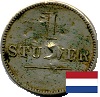
With respect to the rarity of the overstrike: one could conclude from the NGC-page for this coin (follow the link in my first post) that the plain 1886 is rarer/evaluated higher ($45 in VF grade) than the 1866 overstrike ($25).
Therefor, I think that the texts in the Numista catalogue are not adequate. The 1881 overdate is rare, looking at the NGC pricing. But the 1886 overdates are not rare.
As you may or may not know, Numista has to faces: an English one and a French one. Apparently, the English page had grouped the overdate varieties in one line at some time, while on the french side, someone has added new lines for each year and overdate variety. The indication (fr) means that this is the french text, and the the english page doesn't have a translation.
It would be best if the lines with the '1886/66' type of descriptions would get an English translation and the lines with 'overdate varieties exist' would be removed.
NGC is commonly referred to a s a pricing guide, although it has some backdraws. Some countries are overtly underpriced, others are overpriced. But the good thing is that it is very complete, and it goes a long way for the ordinary stuff.
NGC will usually populate only a few colums with values. As a rule of thumb, I divide by 2 with every grade downwards.
Another rule of thumb, some 'law' stated by some other Numista member on the forum long time ago: the price of a coin drops expontentially with the distance from its origin. Typically, Belgian coins will be expensive in local Belgian shops, but may come as a free bonus in American shops.
Also, Internet prices are not local prices. On the Internet, location doesn't matter very much.
Pricing of coins is not a black-and-white story. Collectibles are subject to market rules, or, as we say in Dutch, whatever a fool is willing to pay for it.