Items Celtiberia
Do you want to take a photo with the camera or select an existing image?
(en) The Iberian peninsula has long been inhabited, before the Roman conquest. During the 1st millennium BC, in the Bronze Age, the first wave of migrations into Iberia of speakers of Indo-European languages occurred. These were later (7th and 5th centuries BC) followed by others that can be identified as Celts. Eventually urban cultures developed in southern Iberia, such as Tartessos, influenced by the Phoenician colonization of coastal Mediterranean Iberia, with strong competition from the Greek colonization. These two processes defined Iberia's cultural landscape – Mediterranean towards the southeast and Continental in the northwest. The Celtiberians were a group of Celts and Celticized peoples inhabiting the central-eastern Iberian Peninsula during the final centuries BC. These tribes spoke the Celtiberian language and wrote it by adapting the Iberian alphabet, in the form of the Celtiberian script. In 195 BC, part of Celtiberia was conquered by the Romans, and by 72 BC the entire region had become part of the Roman province of Hispania Citerior. The subjugated Celtiberians waged a protracted struggle against the Roman conquerors, staging uprisings in 195-193, 181-179, 153-151, and 143-133. In 105 BC, Celtiberian warriors drove the Germanic Cimbri from Spain in the Cimbrian War (113–101 BC) and also played an important role in the Sertorian War (80–72 BC). The history of ancient Iberian coinage begins as early as the fifth century BC, but widespread minting and circulation in the Iberian peninsula did not begin until late in the third century, during the Second Punic War. Civic coinages - emissions made by individual cities at their own volition - continued under the first two and a half centuries of Roman control until ending in the mid-first century AD. Some non-civic coins were minted on behalf of Roman emperors during this period and continued to be minted after the cessation of the civic coinages. After the cessation of the civic coinages, these Imperial coins were the only coins minted in Iberia until the coins of the Suebi and Visigoths. Ancient Iberia was connected to the eastern and central Mediterranean, and so there are links to the Greek, Roman and Punic (Carthaginian) civic coinages. Yet there are also many points of difference that reflect dynamics within Iberia itself.
External links: Wikidata (Q11913408), Wikipedia [CA], [EO], [ES], [GL], [PT] 
Celtiberia:
- Arevaci people › Arekorata, City of
- Arevaci people › Arkailikos gens
- Arevaci people › Borneskon
- Arevaci people › Kaisesa
- Arevaci people › Kolounioku, City of
- Arevaci people › Louitiskos
- Arevaci people › Lutia, City of
- Arevaci people › Sekobirikes
- Arevaci people › Sekotias Lakas
- Arevaci people › Teitiakos gens
- Arevaci people › Uxama Argaela, City of
- Belli people › Belaiskom
- Belli people › Bilbilis, City of
- Belli people › Konterbia Belaiska, City of
- Belli people › Sekaisa, City of
- Lusones people › Aratis, City of
- Lusones people › Bursau
- Lusones people › Karaues
- Lusones people › Nertobis
- Lusones people › Samala
- Lusones people › Turiasu, City of
- Pellendones people › Ekualakos
- Pellendones people › Okalakom
- Pellendones people › Roturkon
- Pellendones people › Sekisanos
- Pellendones people › Tabaniu, City of
- Pellendones people › Uarkas
- Titii people › Titum
Iberia (ancient) › Celtiberia › Arevaci people › Arekorata, City of • Unit (158-133 BC)


 As
As (150 BC - 120 BC)
Coins › Standard circulation coins
Brąz • 11.2 g
ACIP# 1751, CNH# 272/15, GCV# 35, Heiss# 7, N# 336464
Iberia (ancient) › Celtiberia › Arevaci people › Arekorata, City of • Denarius (late 2nd century BC)
1 Denarius = 2 Quinarii = 10 Asses • 1 As = 2 Semisses = 4 Quadrantes = 6 Sextantes

 ½ Unit
 (125 BC - 101 BC)
Coins › Standard circulation coins
Brąz • 6.6 g • ⌀ 21 mm
ACIP# 1781, CNH# –, N# 314216

 Unit
Unit (120 BC - 90 BC)
Coins › Standard circulation coins
Brąz • 9 g • ⌀ 23 mm
ACIP# 1777, CNH# 274/29, Vives# 40/12, FAB# 116, N# 327941

 Denarius
 (120 BC - 90 BC)
Coins › Standard circulation coins
Srebro • 3.94 g
ACIP# 1773, CNH# 274/26, Heiss# 1, GCV# 34, N# 336335
Iberia (ancient) › Celtiberia › Arevaci people › Arkailikos gens • Unit (last third of the 2nd century BC)

 Unit
Unit (133 BC - 101 BC)
Coins › Standard circulation coins
Brąz • 11 g • ⌀ 25 mm
ACIP# 1810, CNH# 280/1, N# 316426
Iberia (ancient) › Celtiberia › Arevaci people › Borneskon • Unit (late 2nd century BC)

 Unit
Unit (125 BC - 101 BC)
Coins › Standard circulation coins
Brąz • 9.8 g • ⌀ 25 mm
ACIP# 1586, CNH# 241/3, N# 316423
Iberia (ancient) › Celtiberia › Arevaci people › Kaisesa • Unit (second half of the 2nd century BC)
1 Denarius = 2 Quinarii = 10 Asses • 1 As = 2 Semisses = 4 Quadrantes = 6 Sextantes

 Unit
Unit (150 BC - 101 BC)
Coins › Standard circulation coins
Brąz • 11.5 g • ⌀ 24.5 mm
ACIP# 1819, CNH# 282/1, N# 316421
Iberia (ancient) › Celtiberia › Arevaci people › Kolounioku, City of • Denarius (1st century BC)
1 Denarius = 2 Quinarii = 10 Asses • 1 As = 2 Semisses = 4 Quadrantes = 6 Sextantes

 Unit
Unit (100 BC - 1 BC)
Coins › Standard circulation coins
Brąz • 12.6 g • ⌀ 26.5 mm
ACIP# 1825, CNH# –, N# 316418
Iberia (ancient) › Celtiberia › Arevaci people › Louitiskos • Unit (mid 2nd century BC)

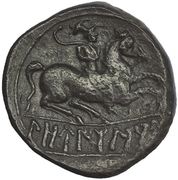 Unit
Unit (166 BC - 134 BC)
Coins › Standard circulation coins
Brąz • 14.5 g • ⌀ 27.5 mm
ACIP# 1787, CNH# 275/1, N# 316416
Iberia (ancient) › Celtiberia › Arevaci people › Lutia, City of • Unit (early 1st century BC)

 Unit
Unit (100 BC - 76 BC)
Coins › Standard circulation coins
Brąz • 8.3 g • ⌀ 22 mm
ACIP# 1600, CNH# 244/1, N# 316440
Iberia (ancient) › Celtiberia › Arevaci people › Sekobirikes • Denarius (late 2nd and early 1st century BC)
1 Denarius = 2 Quinarii = 10 Asses • 1 As = 2 Semisses = 4 Quadrantes = 6 Sextantes

 Denarius
 (110 BC - 80 BC)
Coins › Standard circulation coins
Srebro • 3.96 g
ACIP# 1869, CNH# 292/5, GCV# 38, Heiss# 1, N# 336578

 Denarius
 (110 BC - 80 BC)
Coins › Standard circulation coins
Srebro • 3.53 g • ⌀ 19 mm
ACIP# 1873, CNH# 292/9, N# 382203


 Unit
Unit (110 BC - 80 BC)
Coins › Standard circulation coins
Brąz • 10 g • ⌀ 25 mm
ACIP# 1876, CNH# 291/1, N# 336637
Iberia (ancient) › Celtiberia › Arevaci people › Sekotias Lakas • Unit (last third of the 2nd century BC)

 Unit
Unit (133 BC - 101 BC)
Coins › Standard circulation coins
Brąz • 10.7 g • ⌀ 25.5 mm
ACIP# 1880, CNH# 293/1, N# 316415
Iberia (ancient) › Celtiberia › Arevaci people › Teitiakos gens • Unit (early 1st century BC)

 Unit
Unit (100 BC - 76 BC)
Coins › Standard circulation coins
Brąz • 7.9 g • ⌀ 22 mm
ACIP# 1886, CNH# 294/3, N# 316412
Iberia (ancient) › Celtiberia › Arevaci people › Uxama Argaela, City of • Unit (second half of the 2nd century BC)

 Unit
Unit (150 BC - 101 BC)
Coins › Standard circulation coins
Brąz • 9.4 g • ⌀ 22 mm
ACIP# 1929, CNH# 300/4, N# 316305
Iberia (ancient) › Celtiberia › Belli people › Belaiskom • Unit (late 2nd century BC)

 Unit
Unit (125 BC - 101 BC)
Coins › Standard circulation coins
Brąz • 9.2 g • ⌀ 23.5 mm
ACIP# 1814, CNH# 281/1, N# 314213
Iberia (ancient) › Celtiberia › Belli people › Bilbilis, City of • As (late 2nd and early 1st centuries BC)
1 As = 2 Semisses = 4 Quadrantes

 Semis
Semis (72 BC - 25 BC)
Coins › Standard circulation coins
Brąz • 7.79 g • ⌀ 21 mm
ACIP# 1578, CNH# 239/13, FAB# 267, N# 481144

 Unit
Unit (130 BC - 72 BC)
Coins › Standard circulation coins
Brąz • 15.91 g • ⌀ 28 mm
ACIP# 1567, 1568, Vives# 63/1, CNH# 237/1, N# 481138

 Unit
Unit (72 BC - 25 BC)
Coins › Standard circulation coins
Brąz • 12.1 g • ⌀ 27.5 mm
ACIP# 1574, CNH# –, FAB# 258, GCV# 36, Heiss# 4, N# 294995
Iberia (ancient) › Celtiberia › Belli people › Konterbia Belaiska, City of • Unit (early 1st century BC)

 Unit
Unit (100 BC - 76 BC)
Coins › Standard circulation coins
Brąz • 8.8 g • ⌀ 22.5 mm
ACIP# 1595, CNH# 243/2, N# 316429
Iberia (ancient) › Celtiberia › Belli people › Sekaisa, City of • Unit (late 2nd and early 1st century BC)

 Unit
Unit (180 BC - 155 BC)
Coins › Standard circulation coins
Brąz • 11.75 g • ⌀ 26 mm
ACIP# 1525, CNH# 232/5, SNG BM Spain# 829, N# 481130

 Unit
Unit (120 BC - 20 BC)
Coins › Standard circulation coins
Brąz • 13.80 g • ⌀ 26 mm
ACIP# 1557, CNH# 236/37, FAB# 2138, N# 481136

 Unit
Unit (120 BC - 20 BC)
Coins › Standard circulation coins
Brąz • 8.7 g • ⌀ 23 mm
ACIP# 1560, CNH# 236/40, FAB# 2131, SNG BM Spain# 843-848, N# 296958

 Unit
Unit (100 BC - 50 BC)
Coins › Standard circulation coins
Brąz • 8.98 g • ⌀ 23 mm
ACIP# 1562, CNH# 236/42, SNG BM Spain# 849-851, N# 481135

 Unit
Unit (100 BC - 51 BC)
Coins › Standard circulation coins
Brąz • 8.6 g • ⌀ 23 mm
ACIP# 1559, CNH# 236/39, SNG BM Spain# 852, N# 362298
Iberia (ancient) › Celtiberia › Lusones people › Aratis, City of • Unit (late 2nd century BC)

 ⅓ Unit
 (130 BC - 100 BC)
Coins › Standard circulation coins
Brąz • 3.4 g • ⌀ 17 mm
ACIP# 1809, CNH# 280/5, N# 568669

 ½ Unit
 (130 BC - 100 BC)
Coins › Standard circulation coins
Brąz • 5 g • ⌀ 19 mm
ACIP# 1807, 1808, CNH# 279/3, 280/4, N# 568665

 Unit
Unit (130 BC - 100 BC)
Coins › Standard circulation coins
Brąz • 10 g • ⌀ 24 mm
ACIP# 1805, 1806, CNH# 279/1, 279/2, N# 314212
Iberia (ancient) › Celtiberia › Lusones people › Bursau • Unit (late 2nd century BC)

 Unit
Unit (125 BC - 101 BC)
Coins › Standard circulation coins
Brąz • 10.6 g • ⌀ 14 mm
ACIP# 1591, CNH# 242/4, N# 316442
Iberia (ancient) › Celtiberia › Lusones people › Karaues • Unit (second half of the 2nd century BC)

 Unit
Unit (150 BC - 101 BC)
Coins › Standard circulation coins
Brąz • 10.2 g • ⌀ 25 mm
ACIP# 1821, CNH# 283/1, N# 316441
Iberia (ancient) › Celtiberia › Lusones people › Nertobis • Unit (late 2nd century BC)

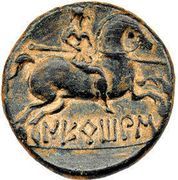 Unit
Unit (125 BC - 101 BC)
Coins › Standard circulation coins
Brąz • 9.4 g • ⌀ 23.5 mm
ACIP# 1602, CNH# 244/2, N# 316439
Iberia (ancient) › Celtiberia › Lusones people › Samala • Unit (early 1st century BC)

 Unit
Unit (100 BC - 76 BC)
Coins › Standard circulation coins
Brąz • 8.3 g • ⌀ 23.5 mm
ACIP# 1866, CNH# 290/1, N# 316432
Iberia (ancient) › Celtiberia › Lusones people › Turiasu, City of • Unit (mid second half of the 2nd century BC)

 Unit
Unit (150 BC - 120 BC)
Coins › Standard circulation coins
Brąz • 12.52 g • ⌀ 25 mm
ACIP# 1708, 1709, CNH# 263/7, 263/8, N# 335830
Iberia (ancient) › Celtiberia › Lusones people › Turiasu, City of • Denarius (second half of the 2nd century BC)
1 Denarius = 2 Quinarii = 10 Asses • 1 As = 2 Semisses = 4 Quadrantes = 6 Sextantes

 Denarius
 (125 BC - 101 BC)
Coins › Standard circulation coins
Srebro • 3.9 g • ⌀ 18 mm
ACIP# 1718, CNH# 264/17, FAB# 2416, GCV# 30, Heiss# 3, N# 154422
Iberia (ancient) › Celtiberia › Pellendones people › Ekualakos • Unit (second half of the 2nd century BC)

 Unit
Unit (150 BC - 101 BC)
Coins › Standard circulation coins
Brąz • 11.6 g • ⌀ 24.5 mm
ACIP# 1846, CNH# 286/1, N# 314204
Iberia (ancient) › Celtiberia › Pellendones people › Okalakom • Unit (early 1st century BC)

 Unit
Unit (100 BC - 76 BC)
Coins › Standard circulation coins
Brąz • 8.1 g • ⌀ 22.5 mm
ACIP# 1863, CNH# 289/1, N# 316448
Iberia (ancient) › Celtiberia › Pellendones people › Roturkon • Unit (early 1st century BC)

 Unit
Unit (100 BC - 76 BC)
Coins › Standard circulation coins
Brąz • 9.0 g • ⌀ 23.5 mm
ACIP# 1865, CNH# 290/1, N# 316446
Iberia (ancient) › Celtiberia › Pellendones people › Sekisanos • Unit (early 1st century BC)

 Unit
Unit (100 BC - 76 BC)
Coins › Standard circulation coins
Brąz • 9.1 g • ⌀ 22.5 mm
ACIP# 1868, CNH# 291/1, N# 316445
Iberia (ancient) › Celtiberia › Pellendones people › Tabaniu, City of • Unit (second half of the 2nd century BC)

 Unit
Unit (150 BC - 101 BC)
Coins › Standard circulation coins
Brąz • 10.2 g • ⌀ 25.5 mm
ACIP# 1605, CNH# 245/1, N# 316444
Iberia (ancient) › Celtiberia › Pellendones people › Uarkas • Unit (early 2nd century BC)

 Unit
Unit (200 BC - 176 BC)
Coins › Standard circulation coins
Brąz • 8.9 g • ⌀ 23.5 mm
ACIP# 1916, CNH# 299/1, N# 316443
Iberia (ancient) › Celtiberia › Titii people › Titum • Unit (early 1st century BC)

 Unit
Unit (100 BC - 76 BC)
Coins › Standard circulation coins
Brąz • 9.2 g • ⌀ 22.5 mm
ACIP# 1900, CNH# 296/1, N# 314211
Numista referees for this issuer:
Brakuje obiektu w katalogu? Dodaj go samodzielnie! (in English)